

Best AI Image Generators in 2026
AI-generated image back in 2022 and it had six fingers on one hand and text that looked like someone had scrambled an alphabet. I remember thinking: interesting, but not useful.✅
I would not think that today.
What Changed Between 2025 and 2026
What I See Three things happened in the past year that reshaped this market significantly.
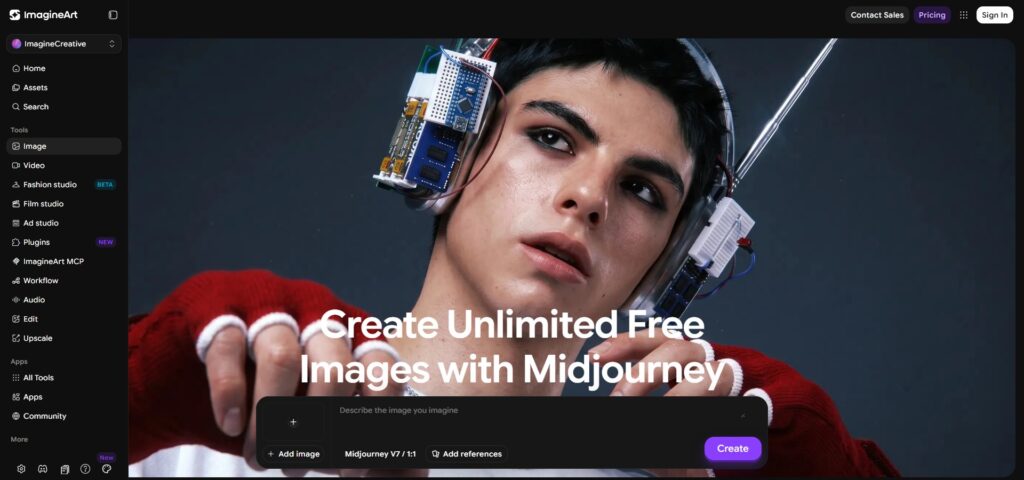
Midjourney V8.1 Best for Artistic and Cinematic Images
OK Lisent Carefully If you want your image to look like art rather than a photograph or the kind of image with mood, atmosphere, and that specific visual intuition that makes people stop scrolling and Midjourney is still the tool nobody else has caught up to.
So Version 8.1, which became the default model in June 2026, renders natively at 2K resolution, generates roughly twice as fast as V7, and handles prompt interpretation noticeably better than earlier versions. The web interface, available at midjourney.com, is now the primary way to access it and Discord is still there but no longer required, which removes the main usability complaint most people had about the platform.
So I Saw What Midjourney does exceptionally well is understand mood. You can write a prompt about a feeling and melancholy, tension, warmth and the model translates that into something visually coherent in a way other models do not reliably replicate. It also has the most advanced creative controls of any tool on this list: aspect ratios, style references, character consistency, outpainting, and a personalization system that learns your aesthetic preferences over time.
Where it falls short: photorealism is not its primary strength. If you need a product photograph or a realistic portrait, GPT Image 2 or FLUX will outperform it. And despite the web app improvements, the workflow still has a steeper learning curve than newer tools built with beginners in mind.
Pricing: Basic at $10/month (approx. PKR 2,800/month), Standard at $30/month (approx. PKR 8,400/month), Pro at $60/month (approx. PKR 16,800/month). No permanent free tier occasional limited trials are offered but not guaranteed.
I personally say : Artists, designers, content creators, bloggers who want visually distinctive images.
Midjourney: https://midjourney.com
GPT Image 2 (ChatGPT) Best Overall Quality in 2026
I personally Use Chgpt a kot for generate images so GPT Image 2 launched in April 2026 and immediately took the top spot on the Artificial Analysis Image Arena with the largest first-to-second gap in the leaderboard’s history. That is not marketing — it is a score produced by human blind-vote comparisons where evaluators cannot see which model generated which image.
The reasoning step is the key difference. Instead of directly interpreting your prompt and generating an image, GPT Image 2 plans the composition first time thinking about layout, lighting, and reference if needed and then generates. The result is that prompt adherence is significantly better than most alternatives. What you describe is closely what you get, which was a persistent frustration with earlier image generators.
Text rendering inside images is also genuinely good now, which opens up use cases that used to require Photoshop or Canva as a follow-up step. You can generate an image with readable text included and have reasonable confidence it will look right.
Pricing: Included in ChatGPT Plus at $20/month (approx. PKR 5,600/month). Available for free through Microsoft Bing Image Creator (400 images/month — genuinely useful for casual use). Free tier through ChatGPT with limited generations.
personally: General use, bloggers, marketers, anyone already using ChatGPT Plus.
ChatGPT Images: https://chat.openai.com
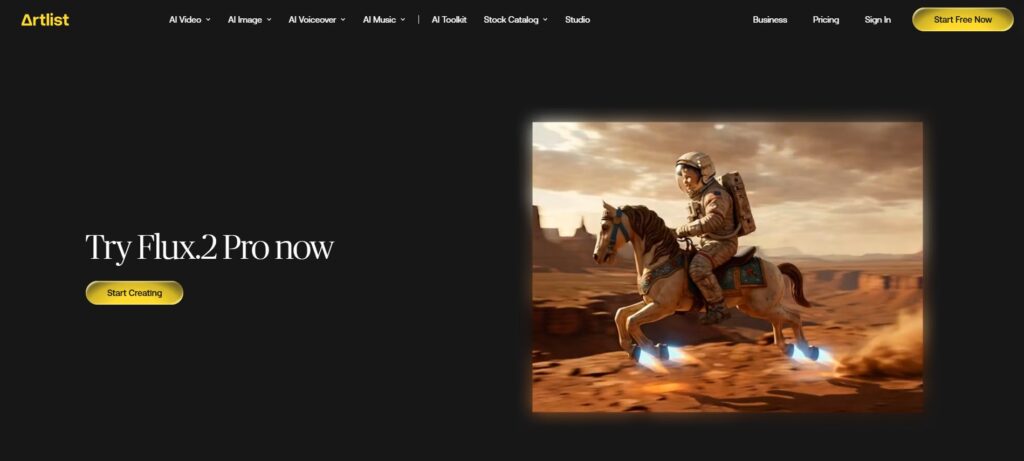
FLUX 2 (Black Forest Labs) Best for Photorealism
So FLUX came from a team of former Stability AI researchers and has positioned itself as the technical quality leader for photorealistic image generation. In side-by-side comparisons, FLUX 2 Pro is consistently described as producing output that is difficult to distinguish from actual photographsand particularly for portraits, product shots, and environmental scenes.
The open-source foundation is FLUX’s defining characteristic. You can download the model weights and run it on your own hardware with no usage limits, no subscription fees, and no content policies beyond what you configure yourself. For developers, photographers, and anyone who wants full control over their image pipeline, that is a significant advantage no closed model can match.
i thing For users who do not want to run it locally, FLUX 2 Pro is available through API partners at approximately $0.03-0.06 per image, which works out to very reasonable costs for moderate volume.
Pricing: Free to use locally (requires compatible GPU). Hosted via API at approximately $0.03-0.06 per image. Various platform subscriptions available.I
I personally say: Developers, photographers, content creators who need photorealistic images, anyone who wants full control over their image pipeline.
FLUX: https://blackforestlabs.ai
Google Imagen 4 (Gemini) Best Free Option in 2026
Gamini this is one of the my favorite Tool Nano Banana 2 is Google’s internal name for the image model powering Gemini in early 2026 and held the number one spot on the Artificial Analysis image benchmark for several months before GPT Image 2 overtook it. It currently sits in the top three, which means the free tier of the Gemini app gives you access to one of the three best image models available.
The practical advantages over Midjourney are specific: it generates images 2-4 seconds faster, it handles photorealistic scenes and natural lighting particularly well, and it integrates Google Search Grounding which means it can incorporate visual references for current events, products, and locations when generating images. For news-adjacent content or anything referencing the current world, that grounding is a genuine capability others do not have.
For casual users generating a few images per week, the free Gemini app tier is genuinely hard to justify paying anything for. The quality is there.
Pricing: Free through the Gemini app with daily limits. Included in Google AI Pro at $19.99/month (approx. PKR 5,597/month) for higher limits.
Best for: Casual users, Google Workspace users, anyone who wants top-tier image quality at no cost.
Gemini Official Website → https://gemini.google.com
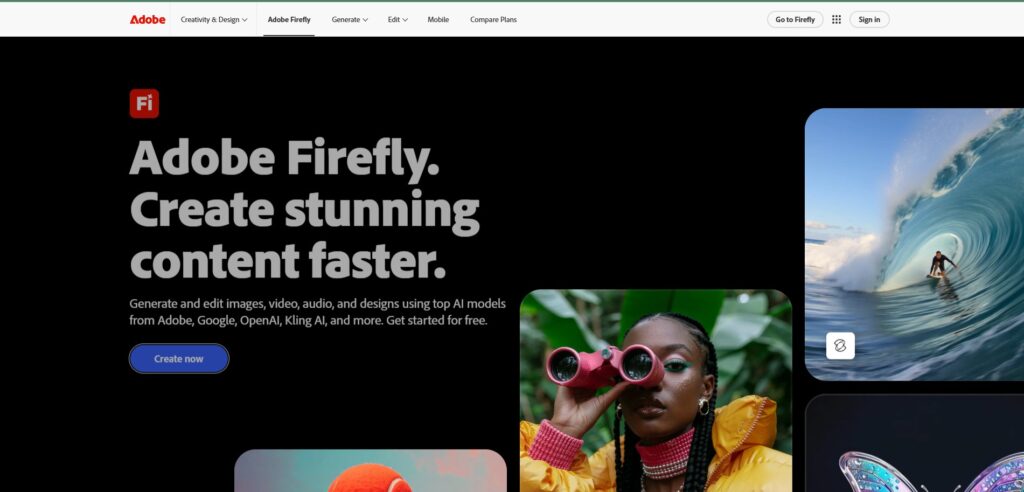
Adobe Firefly Best for Commercial and Safe Use
Adobe Firefly is the only tool on this list trained exclusively on licensed content — Adobe Stock images, public domain material, and content where Adobe has explicit permission. That distinction matters for anyone using AI images in commercial work.
Most AI image generators are trained on data scraped from the internet, which includes copyrighted images without explicit licensing. For personal blogs and casual use, this is generally a low-risk reality. For businesses using AI images in advertising, packaging, or client-facing materials where legal risk is a genuine concern, Firefly’s clean training data and Adobe’s enterprise indemnification offer protection no other tool provides.
The integration with Adobe Creative Cloud is the other practical advantage. If you already work in Photoshop or Illustrator, Firefly works inside those tools rather than requiring you to generate images separately and import them.
Pricing: Limited free generation included with Creative Cloud subscriptions. Firefly Standard starts at $4.99/month (approx. PKR 1,397/month) for 2,000 generative credits.
Best for: Commercial projects, agencies, businesses with legal exposure, Adobe Creative Cloud users
.Adobe Firefly: https://firefly.adobe.com
Leonardo.ai Best Free Option for Volume
Leonardo.ai offers 150 free generation credits per day — which works out to approximately 50-150 images depending on resolution settings. For a blogger, content creator, or student who generates images regularly but does not need the absolute top quality tier, 150 daily credits is a genuinely substantial free allowance.
The platform supports multiple models, including some of the FLUX variants, and has a clean web interface that is accessible to beginners without requiring technical knowledge. The community gallery and prompt inspiration features make it easier to learn effective prompting than most other tools.
Quality at the free tier is solid — not at the level of Midjourney or GPT Image 2, but significantly better than what free tiers offered two years ago.
Pricing: 150 credits per day free. Paid plans from $12/month (approx. PKR 3,360/month) for higher limits and priority generation.
Best for: Beginners, bloggers, content creators who need volume at low cost.
Leonardo.ai: https://leonardo.ai
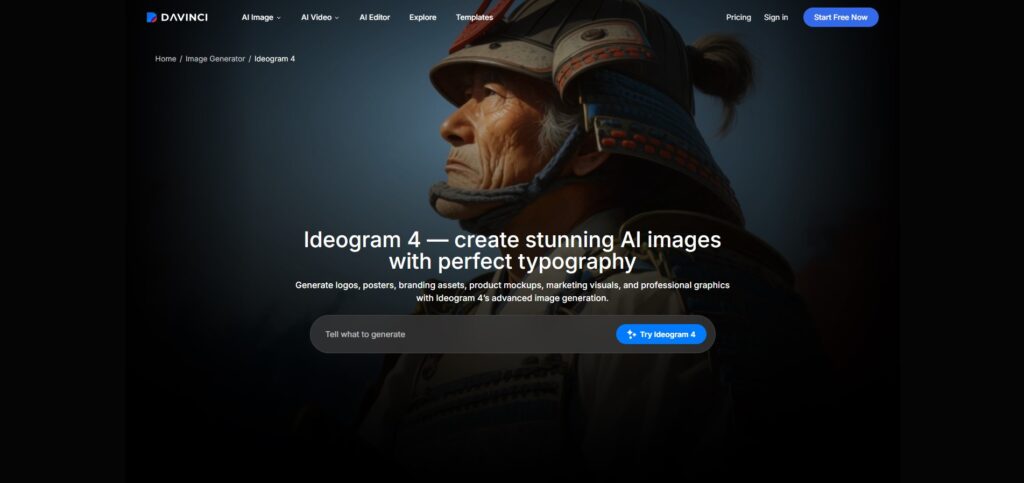
Ideogram 3.0 Best for Text in Images
One persistent weakness of AI image generators has been text rendering — the letters come out warped, misspelled, or stylistically inconsistent with the rest of the image. Ideogram was built specifically to solve this, and it does it better than any other tool on this list.
If you need an image that includes readable text as part of the design — a poster, a logo concept, a social media graphic with a headline, a book cover — Ideogram is the most reliable choice. The free tier is functional, and the interface is simpler than Midjourney.
Pricing: Free tier available. Paid plans from $8/month (approx. PKR 2,240/month).
Best for: Social media graphics, posters, any image that requires readable text.
Ideogram AI: https://ideogram.ai
Which Tool Should You Actually Start With
The honest answer depends on what you are making and whether you are willing to pay for it.
If you want the best overall quality and are already on ChatGPT Plus — GPT Image 2 is already included, and starting there makes sense before adding another subscription.
If you want the best artistic results and generate images regularly — Midjourney’s $10/month Basic plan is the lowest entry point for the best aesthetic quality available.
If you want genuinely free and genuinely good — Google’s Gemini app with Nano Banana 2 is the best free option in 2026. No credit card. Competitive with paid tools.
If you need images for commercial use and want legal protection — Adobe Firefly is the only choice that gives you that combination of clean training data and enterprise indemnification.
If you are technical and want full control — FLUX running locally is the most capable option without ongoing subscription costs, once you have the hardware.
Quick Comparison Table
Tool | Best For | Free Tier | Starting Price Midjourney V8.1 | Artistic images | No | $10/month (PKR 2,800/month) GPT Image 2 | Overall quality | Limited via Bing | $20/month with ChatGPT (PKR 5,600/month) FLUX 2 | Photorealism | Local only | ~$0.03/image via API Google Imagen 4 | Free quality | Yes (daily limit) | Free / $19.99/month (PKR 5,597/month) Adobe Firefly | Commercial safety | Limited | $4.99/month (PKR 1,397/month) Leonardo.ai | Volume free | 150 credits/day | $12/month (PKR 3,360/month) Ideogram 3.0 | Text in images | Yes | $8/month (PKR 2,240/month)
Final Thoughts
The AI image generation space in 2026 is the best it has ever been for the average user — and free options have genuinely caught up to where paid tools were two years ago. There is no single winner across every use case, which is why the strongest approach is to match the tool to the job.
Start with the Gemini app if you want to try image generation at zero cost. Move to Midjourney or GPT Image 2 when you know what you are making and are ready to invest in quality. Add Ideogram for text-heavy designs, Adobe Firefly for commercial work, and FLUX if your needs outgrow what closed models offer.
The days of AI images looking like they were generated by a fever dream are over. In 2026, the question is not whether AI image generation is worth using — it is which tool fits what you are trying to make.
FAQ SECTION
Q: Which AI image generator is best in 2026? A: GPT Image 2 scores highest on independent quality benchmarks in 2026, while Midjourney V8.1 remains the top choice for artistic and cinematic images. The best choice depends on your use case — GPT Image 2 for overall quality and text rendering, Midjourney for aesthetic and mood-driven images.
Q: Is there a good free AI image generator in 2026? A: Yes. Google’s Gemini app (powered by Nano Banana 2) offers top-three benchmark quality at no cost with daily limits. Microsoft Bing Image Creator offers 400 free images per month using GPT Image 2. Leonardo.ai provides 150 free credits per day.
Q: Is Midjourney still worth it in 2026? A: Yes — for artistic images, Midjourney V8.1 remains the quality leader. The Basic plan at $10/month (approx. PKR 2,800/month) is reasonable for regular use. If you primarily need photorealism rather than artistic style, GPT Image 2 or FLUX may serve you better at similar or lower cost.
Q: Can I use AI-generated images commercially? A: It depends on the tool. Midjourney, GPT Image 2, and Leonardo.ai all offer commercial usage rights on paid plans. Adobe Firefly is the most legally secure option because its training data is entirely licensed. Always read the terms of service before using AI images for commercial purposes.
Q: What happened to DALL-E 3? A: OpenAI retired DALL-E 3 in May 2026 and replaced it with GPT Image 2 (marketed as ChatGPT Images 2.0). GPT Image 2 is significantly more capable than DALL-E 3, especially for text rendering and prompt adherence.
Q: Which AI image generator is best for beginners? A: Leonardo.ai has the most beginner-friendly interface with generous free credits. ChatGPT’s image generation is also easy to access if you are already using it for other tasks. Midjourney has the steepest learning curve but produces the most visually distinctive results once you get past the initial setup.