

Best AI Humanizer Tools in 2026
Let’s start with the uncomfortable truth: most “best AI humanizer” articles you’ll find are written for one specific audience students trying to sneak AI-written essays past Turnitin. That’s not what this post is about, and honestly, I won’t recommend a tool for that purpose.
But there’s a completely different, legitimate problem these same tools solve: you used AI to draft a blog post or a client’s marketing copy, the ideas are genuinely yours, and the output still reads a little stiff repetitive sentence rhythm, that unmistakable “as an AI language model” cadence even when the phrase itself is gone. That’s the actual use case worth solving.
What These Tools Actually Do
AI detectors look for two things mainly: perplexity (how predictable your word choices are) and burstiness (how much your sentence length varies). Human writing naturally swings between a short punchy line and a long winding one. AI writing tends to sit in a comfortable, even rhythm — which is exactly the pattern these detectors are trained to spot, and exactly what humanizer tools try to break up.
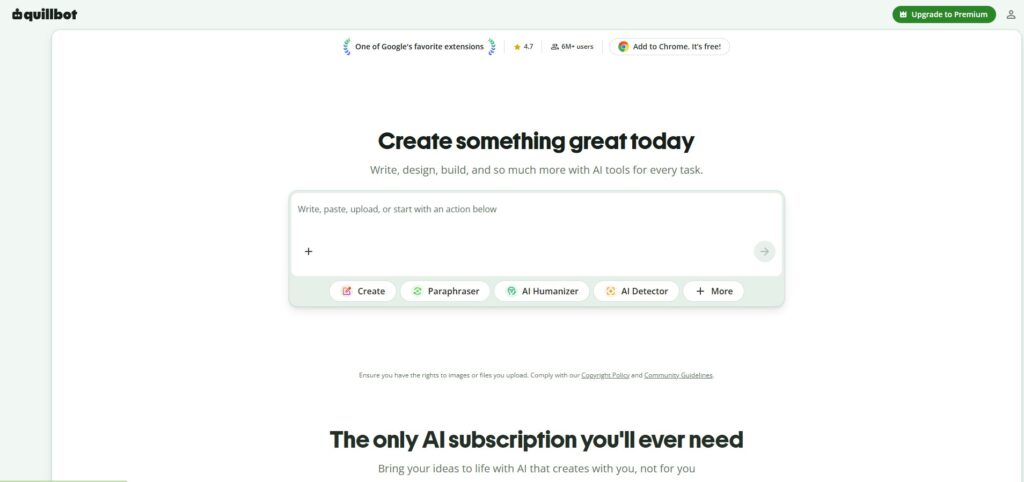
QuillBot Best for Light Editing, Not Heavy Lifting
QuillBot isn’t a dedicated humanizer, and it doesn’t pretend to be it’s a paraphrasing and grammar tool that happens to soften some AI patterns along the way. If your draft is already 80% there and just needs a polish pass, it’s a solid, low-risk choice.
Best for: Light editing, grammar cleanup, non-native English writers polishing tone
Pricing: Free plan with limits; Premium around $9.95/month (approx. PKR 2,790/month)
Honest limitation: It swaps words more than it restructures sentences, so heavy AI patterns often survive
QuillBot: https://quillbot.com
Grammarly’s Humanizer Feature Best for Professional Documents
I personally say Grammarly added humanizing capability directly into its existing tone and clarity tools, which makes it a natural fit if you’re already using it for proposals, emails, or reports. It keeps meaning intact while smoothing out robotic phrasing.
Best for: Business writing, proposals, professional communication
Honest limitation: Built for polish and clarity, not aggressive rewriting
Grammarly: https://grammarly.com
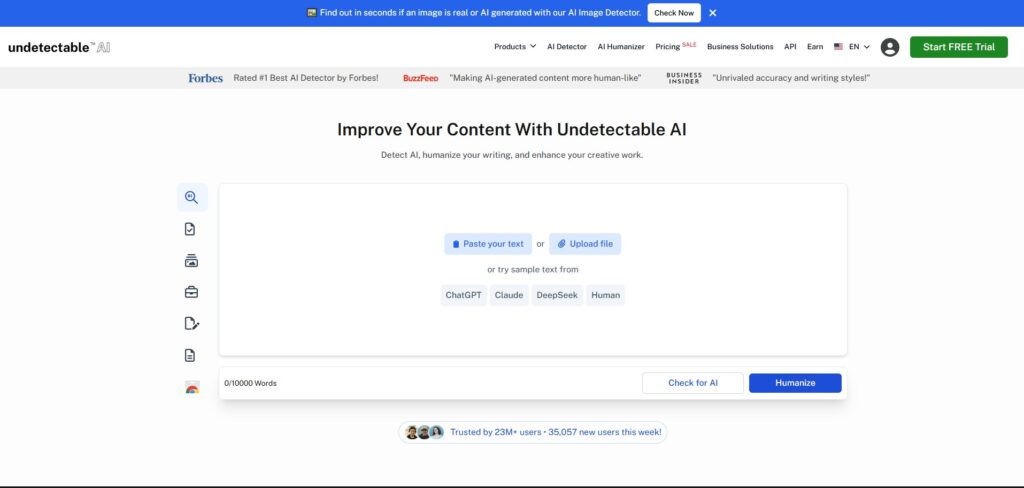
Undetectable AI Best for Checking Before You Publish
What sets this one apart is that it doubles as a detector and a rewriter in the same dashboard and you can check your draft against multiple detection tools, then rewrite it, then check again, without switching platforms.
Best for: Content teams who want to verify before publishing, not just guess
Pricing: Plans vary; free tier includes limited checks
Honest limitation: Results vary depending on which detector you’re testing against, since none of them agree perfectly with each other
Undetectable AI: https://undetectable.ai
What I’d Actually Recommend Instead
Here’s my honest take, and it’s not the answer most “best humanizer” posts give you: the strongest humanizer is still you. Add a real example from your own experience. Break a long paragraph in half for no reason other than that’s how people actually talk. Let one sentence be short. Fine.
Running your own draft through a tool, then reading it out loud yourself and fixing anything that still sounds off, works better than trusting any tool to do the whole job. That’s also exactly the standard your own content policy already holds you to — genuinely good, personally edited writing, not a tool doing all the talking.
Where the Line Actually Is
Using these tools to make your own genuine ideas read more naturally in a blog post or marketing copy is a normal, defensible use of AI writing assistance. Using them to submit AI-written academic work as your own is a different thing entirely, and it’s worth being honest about that distinction, whichever side of it you’re on. Universities are also increasingly aware of humanizer tools and updating detection accordingly, so treating them as a reliable cheating shortcut is a genuinely bad bet even setting the ethics aside.
FAQ
Do AI humanizer tools actually work? Results vary significantly by tool and by which detector you’re testing against — none of them offer a guaranteed outcome, and detector accuracy itself is inconsistent.
Is it okay to use an AI humanizer on my own blog content? If the ideas and research are genuinely yours and you’re just smoothing out robotic phrasing, that’s a reasonable use of AI writing tools, similar to using a grammar checker.
Will Google penalize AI-assisted content? Google has stated it focuses on content quality and helpfulness rather than how content was produced, but genuinely thin or unedited AI content tends to perform poorly regardless of detection tools.
What’s the difference between an AI humanizer and a paraphrasing tool? Paraphrasing tools mainly swap words and phrasing. Humanizers specifically target the sentence-length and word-predictability patterns that AI detectors are trained to catch.