
8 New Best AI Tools Coming in 2027
Perplexity Comet The AI Browser That Replaces Google Search
Perplexity Comet: https://perplexity.ai
The browser tab is where most of us spend most of our time and Perplexity decided to rebuild it from scratch around AI.
I realize comet is not a chatbot you open separately. It lives inside the browser itself and that such a cool thing. As you browse, it reads what is on the page, anticipates what you need next, and answers questions without you switching to another tab. and also It can open your calendar, check your meeting invites, and prepare a briefing from your own files before a call starts.
It was originally priced at $200 per month and available only to a small group. and In March 2026, it went free across iOS, Android, Windows, and Mac. The 2027 expansion is expected to add more languages, tighter integration with mobile devices, and deeper connection to personal files.
If this works as described at scale, it ends the habit of opening ten tabs and figuring out the answer yourself. That is a bigger behavioral shift than any chatbot produced.
Researchers, students, professionals who spend hours daily in a browser.
Gemini Omni AI That Creates Video From Anything
Google Gemini: https://gemini.google.com
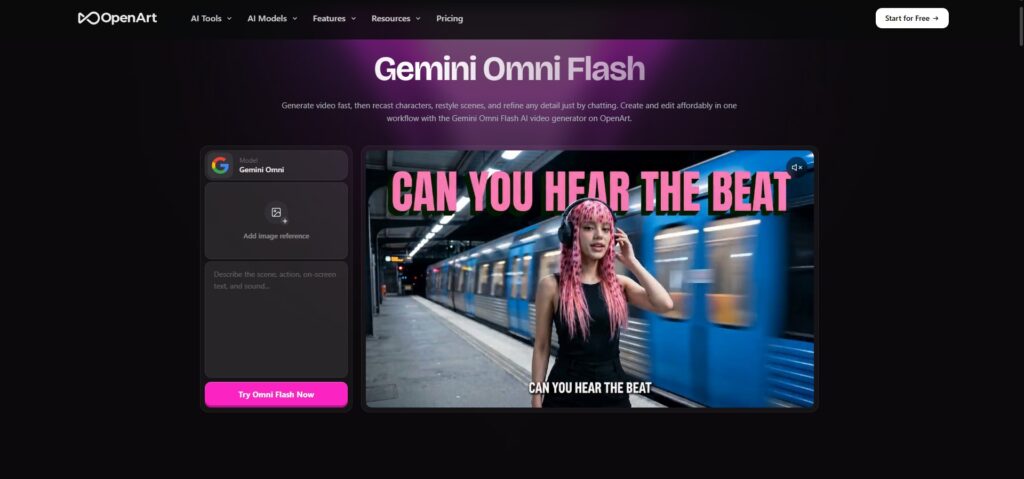
WE all now Google launched Gemini Omni in May 2026 with one core idea: I say it was soo good make relistic things and super easy to use give it any combination of images, audio, video, and text, and it creates a high quality video output grounded in real world knowledge.
So The 2027 version is expected to close the remaining quality gaps longer videos, better character consistency across scenes, and tighter integration with Google Workspace so that a presentation can become a video explanation in one step.
And also For educators, marketers, and content creators who currently spend hours turning ideas into video, Omni makes that workflow a ten-minute task. The implications for YouTube, e-learning, and corporate training content are significant enough that entire production pipelines are being redesigned around it.
So what i Say It is Best for Content creators, educators, marketers, anyone who regularly needs to explain something visually.
Apple Intelligence 2027 Siri Finally Gets Serious
Apple Intelligence: https://apple.com/apple-intelligence
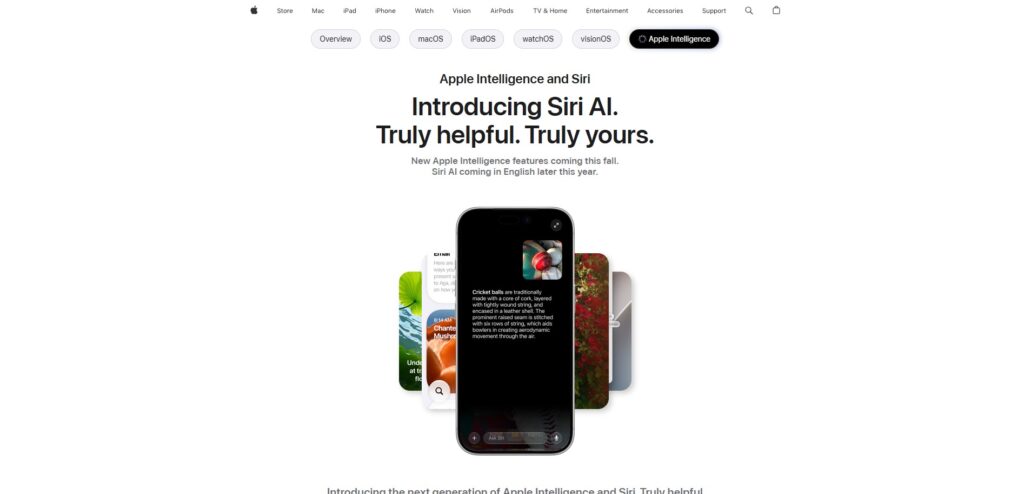
Now Apple spent years being the company that was late to every AI trend but executed better than everyone else once it arrived. 2027 is where that pattern plays out for AI.
The 2027 release builds on the foundation Apple announced in 2026 on-device processing that keeps data private, integration across iPhone, iPad, and Mac, and a Siri that actually understands context instead of misunderstanding every third request.
I personally relize What makes the 2027 update different is the depth of app integration. they work on siri Siri will read your emails, understand what is happening in your schedule, and complete tasks across apps without you switching between them. It will remember context from previous conversations, which is the single most frustrating limitation of the current version.
For the hundreds of millions of people who use Apple devices every day and have never touched ChatGPT, this is how AI actually enters their life — through the device they already have, working better than it did before.
Microsoft Copilot Wave 4 AI Agents for Every Office Task
Microsoft Copilot: https://copilot.microsoft.com
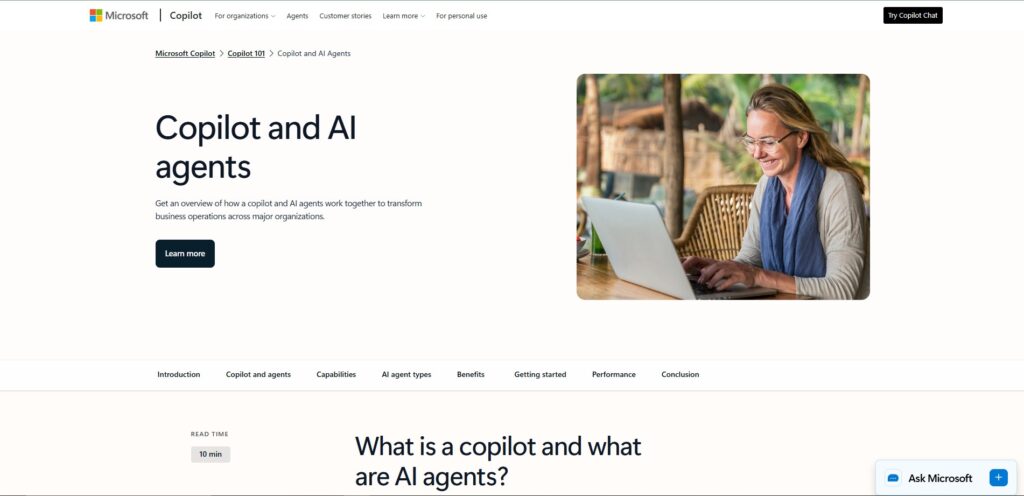
You can see Microsoft has been moving faster on AI than most people expected, and Wave 4 in 2027 is expected to complete the transformation of Office from a suite of documents into a suite of agents.
And also The current version already runs autonomous multi-step tasks inside Excel, Word, and PowerPoint. The 2027 version is expected to add agents that handle entire workflows not just one document, but the chain of tasks around a project from brief to final delivery.
For anyone who works inside Microsoft 365, the practical result is that repetitive office work that currently takes hours becomes something you describe once and review at the end.
Mistral Robostral AI That Navigates Physical Space
Mistral AI: https://mistral.ai
This one is genuinely different from everything else on this list because it does not live on a screen.
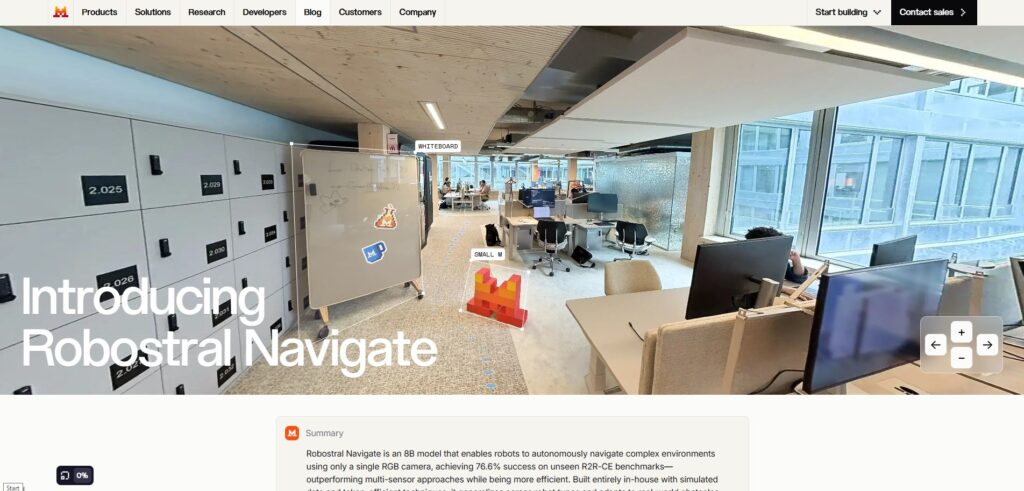
Also Mistral launched Robostral Navigate in 2026 an AI model that enables robots to navigate complex physical environments using only a standard camera, with no depth sensors or specialized hardware. It outperformed multi-sensor systems on standard navigation benchmarks.
The 2027 expansion is expected to bring this capability to consumer robotics — home assistants, warehouse logistics, and industrial environments where a robot needs to move through unfamiliar spaces reliably.
This is the beginning of physical AI rather than digital AI. The tools that come from this research will eventually handle tasks that currently require a person to physically be somewhere.
Best for: Anyone watching the transition from software AI to physical AI.
GPT-Live Real-Time AI Voice That Actually Listens
OpenAI launched GPT-Live in mid-2026 with a full-duplex architecture meaning it listens and speaks at the same time rather than taking turns, which makes it feel like an actual conversation instead of a question-and-answer session.
The 2027 version is expected to expand voice capabilities to include better emotional recognition, longer memory across conversations, and the ability to delegate complex tasks to more powerful background models while maintaining the conversation flow.
The practical result for everyday users is a voice AI that you can actually talk to while driving, cooking, or exercising one that remembers what you discussed yesterday and picks up where you left off.
Best for: Anyone who finds typing inconvenient, commuters, people who prefer voice interaction.

Grok 4.5 and Beyond xAI’s Fastest Growing Model
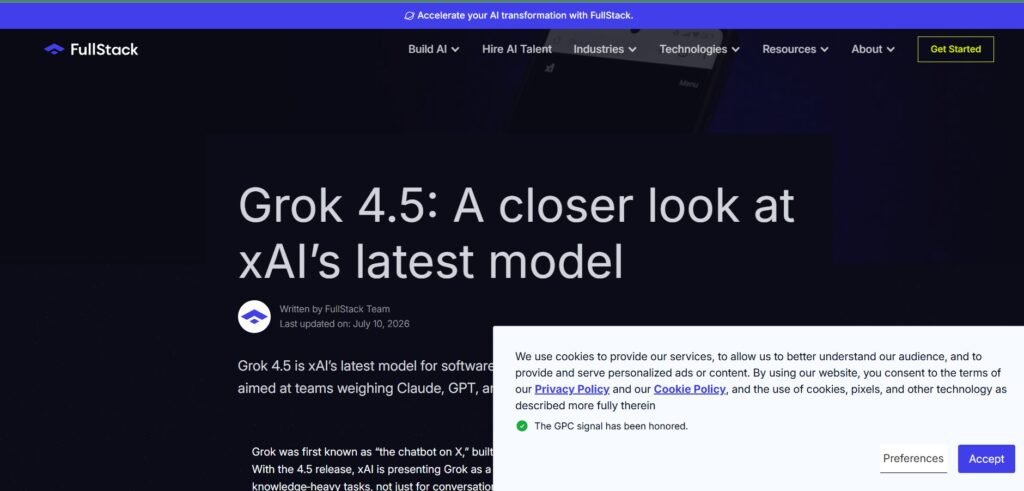
Elon Musk’s xAI has been moving faster than most analysts expected. Grok 4.5 launched in July 2026 and was described as Opus-class performance at lower cost and faster speed than comparable models.
What makes Grok interesting heading into 2027 is not raw capability — it is distribution. Grok is built into X (formerly Twitter), which means hundreds of millions of users encounter it without making a deliberate choice to use an AI tool. The 2027 version is expected to deepen that integration, becoming the default AI layer for social media interaction.
For users who spend time on X, Grok will increasingly handle research, summarization, and content creation within a platform they already use daily.
Best for: X users, social media professionals, anyone wanting AI without a separate subscription.
Claude Cowork AI That Works While You Sleep
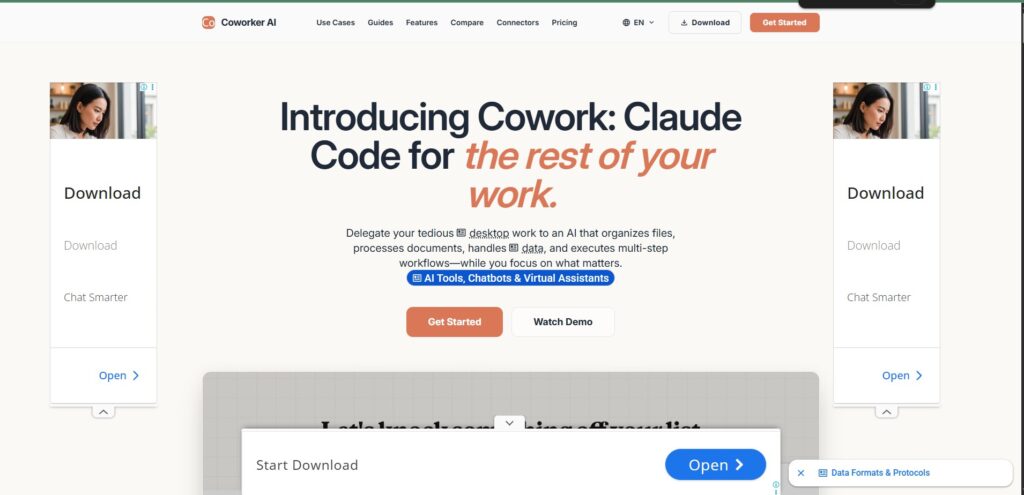
So the Anthropic’s Claude Cowork was originally a desktop-only product. The expansion to web and mobile announced in July 2026 means it can now continue working on tasks across devices, in the background, without any device staying online.
The 2027 version is expected to handle longer, more complex autonomous tasks drafting complete client deliverables, processing batches of contracts, building research reports from scratch while you focus on other things.
The shift this represents is meaningful. Current AI tools require you to be present, reviewing each step. Cowork moves toward AI that takes a task, completes it, and presents you with the finished result. For knowledge workers who manage complex projects, the time savings compound quickly.
What This All Means for You
The common thread across every tool on this list is the same: AI is moving from assistant to executor.
Until recently, AI helped you do things faster. The next generation does things while you are doing something else. That is a different kind of tool, and it changes what skills matter and what workflows are worth building around.
The people who will get the most from 2027’s AI wave are the ones who have already built the habit of working with AI in 2026 — because they will know how to review, redirect, and use autonomous output effectively. The learning curve for these tools is shallower if you already trust how AI thinks.
The best time to build that habit was last year. The second best time is now.
FAQ SECTION
Q: Which 2027 AI tool will have the biggest impact for regular users? A: Apple Intelligence 2027 will reach the most people simply because it runs on devices hundreds of millions already own, with no new app or subscription required. For people who actively choose AI tools, Perplexity Comet’s browser integration is likely to change daily research habits most visibly.
Q: Will these tools be free? A: Most have free tiers or come built into existing subscriptions. Perplexity Comet is currently free. Apple Intelligence is included with Apple devices. GPT-Live is included in ChatGPT free and Plus plans. Grok is free through X. Gemini Omni is available through Google AI Pro. Microsoft Copilot requires a Microsoft 365 subscription.
Q: Is physical AI like Mistral Robostral ready for consumer use in 2027? A: The navigation model is real and performing well on benchmarks, but consumer robotics applications are still in early development. Expect to see it in industrial and logistics settings first, with home applications following in 2028 and beyond.
Q: Should I wait for 2027 tools before learning AI? A: No. The tools available today — ChatGPT, Claude, Gemini, Perplexity — are more capable than most people are using them. Learning to work effectively with current tools is the best preparation for using the next generation well. Waiting for better tools before building the habit means starting from zero again when they arrive.
Q: Will AI agents replace human workers in 2027? A: Not broadly. What 2027’s agentic tools will do is absorb more of the coordination, formatting, and repetitive execution that currently consumes a significant portion of many knowledge workers’ time. The judgment, relationships, and creative direction that produce real value remain with people.
Best AI Tools Into Your Daily Life (Easy & Practical 2026 Guide)
Best way Students Are Saving 10+ Hours a Week With AI in 2026 (Real Workflow)